

KEY POINTS
- Drone strikes caused a major fire at Zawiya refinery.
- NOC threatens to halt operations if attacks continue.
- Libya’s oil facilities face growing security risks.
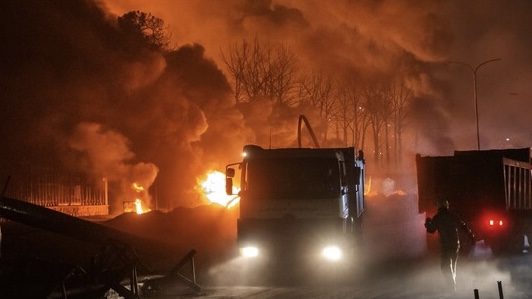
A major fire has broken out at Libya’s Zawiya oil refinery after a drone attack, prompting the country’s National Oil Corporation, NOC, to warn that it could stop operations at the facility if further attacks continue.
The incident has raised fresh concerns about the safety of Libya’s oil infrastructure, which remains critical to the country’s economy and fuel supply.
The Zawiya refinery is Libya’s largest operating refinery, with the capacity to process about 120,000 barrels of crude oil per day. It is located roughly 40 kilometres west of the capital, Tripoli.
The fire started on Monday evening after a drone directly targeted a fuel storage tank at the refinery, according to the NOC.
The targeted tank, identified as tank 402-T and operated by the Brega Oil Company, was holding about 4.5 million litres of petrol when it was hit.
The NOC said the attack caused a severe fire and eventually led to the complete collapse of the tank.
Video footage verified by Al Jazeera showed large flames and thick black smoke rising above the refinery as firefighters battled to control the blaze.
Emergency officials said there were no serious injuries linked to the incident. Most of the people who required medical attention were treated for the effects of smoke inhalation.
The latest drone strike was not an isolated incident. The NOC said the refinery had already been targeted in two other attacks in the days before the major fire.
A water desalination facility at the refinery was reportedly hit by drones on Sunday, while a naphtha storage reservoir was targeted on Saturday.
The attacks prompted the oil company to declare a maximum emergency in the area and call on authorities to investigate the incidents and identify those responsible.
No group has claimed responsibility for the attacks, and the NOC has not publicly identified anyone as being behind the strikes.
Further drone attack reported
The NOC later said the refinery remained under threat, reporting another drone attack on an oil blending and filling facility operated by the Zawiya Oil Refining Company.
According to the company, the drone fell close to a major oil storage tank and a network of pipelines used to produce oils for the domestic market.
The incident did not result in reported casualties or damage, but it added to concerns about the continued targeting of the refinery and other oil-related facilities.
The National Oil Corporation warned that continued attacks could force the company to suspend operations at the Zawiya refinery.
The company said it could declare force majeure if the attacks continue.
A force majeure declaration is generally used when extraordinary events beyond a company’s control prevent it from fulfilling normal business obligations.
Such a decision could have wider effects because the Zawiya refinery plays an important role in Libya’s domestic fuel supply.
The Brega Oil Company called on all sides involved in Libya’s conflict to stop fighting around oil facilities and storage sites.
The company stressed that oil infrastructure belongs to all Libyans and is vital to the country’s economy.
It also said the protection of these facilities should be treated as a national responsibility.
The appeal reflects growing concerns that continued violence around oil installations could affect Libya’s ability to maintain fuel supplies and protect a major source of national revenue.
The latest attacks come against the background of Libya’s long-running political and security crisis.
Although a ceasefire reached in 2020 helped bring an end to major fighting, rival political authorities and armed groups continue to hold influence across parts of the country.
Libya has remained divided since 2014, following years of instability after the 2011 uprising that ended the rule of longtime leader Muammar Gaddafi. The country currently has two major centres of political power.
The internationally recognised government is based in Tripoli and led by Prime Minister Abdul Hamid Dbeibah, while a rival administration in eastern Libya is supported by military commander Khalifa Haftar.