

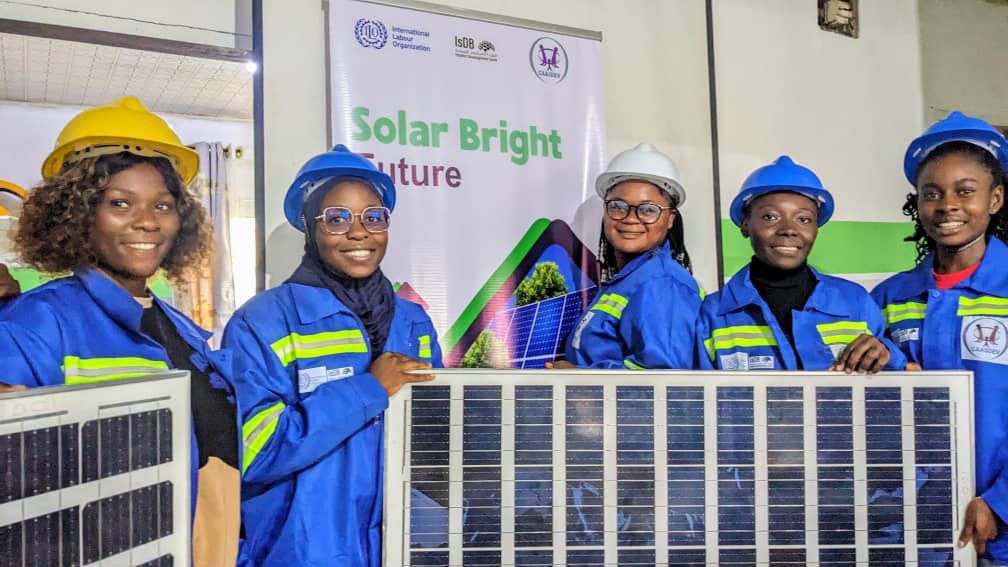
Solar Bright Future, an initiative that trains young people to install and maintain solar systems in Cameroon’s conflict regions, has been named a finalist in the United Nations Sustainable Development Goals Action Awards.
It was selected in the Resilience category of the Heroes of Tomorrow: UN SDG Action Awards, according to the awards’ official website and information shared with journalists by the UN SDG Action Campaign. Finalist status is not a win, and the information available does not say when winners will be named.
What Solar Bright Future does
The program works in Cameroon’s Northwest and Southwest regions, where a separatist conflict that began around 2017 has displaced many people. It trains young women and men from displaced and host communities in solar system design, installation and maintenance, so they can earn a living while bringing electricity to underserved areas.
About 493,402 people remained internally displaced in the two regions as of June 2026, according to the UN profile, which cites data from the UN refugee agency and the humanitarian affairs office.
Training and impact in numbers
The initiative has trained 300 young people as solar technicians and entrepreneurs, helping them start businesses, join energy cooperatives and enter the renewable energy workforce.
Through Solar Bright Solutions, its social enterprise, the program provides solar products and services to off grid rural communities, including maternity facilities in health centers.
According to the UN profile, it has electrified 712 households and 41 off grid maternity facilities in health centers. It has also installed cold storage for vaccines, benefiting more than 100,000 women and children a year.
The program includes people with disabilities and deliberately opens routes for women into the solar industry, where they have long been underrepresented.
Women face extra barriers in technical trades, so recruiting them deliberately is part of what the profile highlights.
Reliable power matters in maternity facilities, where lighting, equipment and vaccine refrigeration can affect how safely mothers and newborns are cared for.
Why the award finalist status matters
Displacement often cuts young people off from work, school and reliable power. Solar training speaks to all three, which is why coverage of the award presents the model as relevant to other African countries.
Sustaining such work will not be easy. It needs money for equipment, technical support and maintenance, plus access to finance and viable markets for the technicians once they are trained.
Last year, Nigeria’s Smartel won the Creativity category of the same awards for modular hydroponic farming systems that grow crops without soil, cutting water use by up to 90%, according to the UN.
Similar efforts exist elsewhere. A UN Development Programme initiative in northwest Nigeria, the North West Climate Peace Hubs, has trained 150 young people from conflict affected areas in solar power installation.
The awards recognize community led work toward the Sustainable Development Goals, and the Resilience category highlights efforts that help communities recover from shocks.
Finalist status brings attention. What Solar Bright Future needs now is the equipment, finance and customers that turn trained technicians into lasting businesses.