

Ghana has two major gas projects in the works, one offshore and one onshore, that together could ease the country’s reliance on costly liquid fuels for power generation. Whether ordinary customers see lower bills is a separate question.
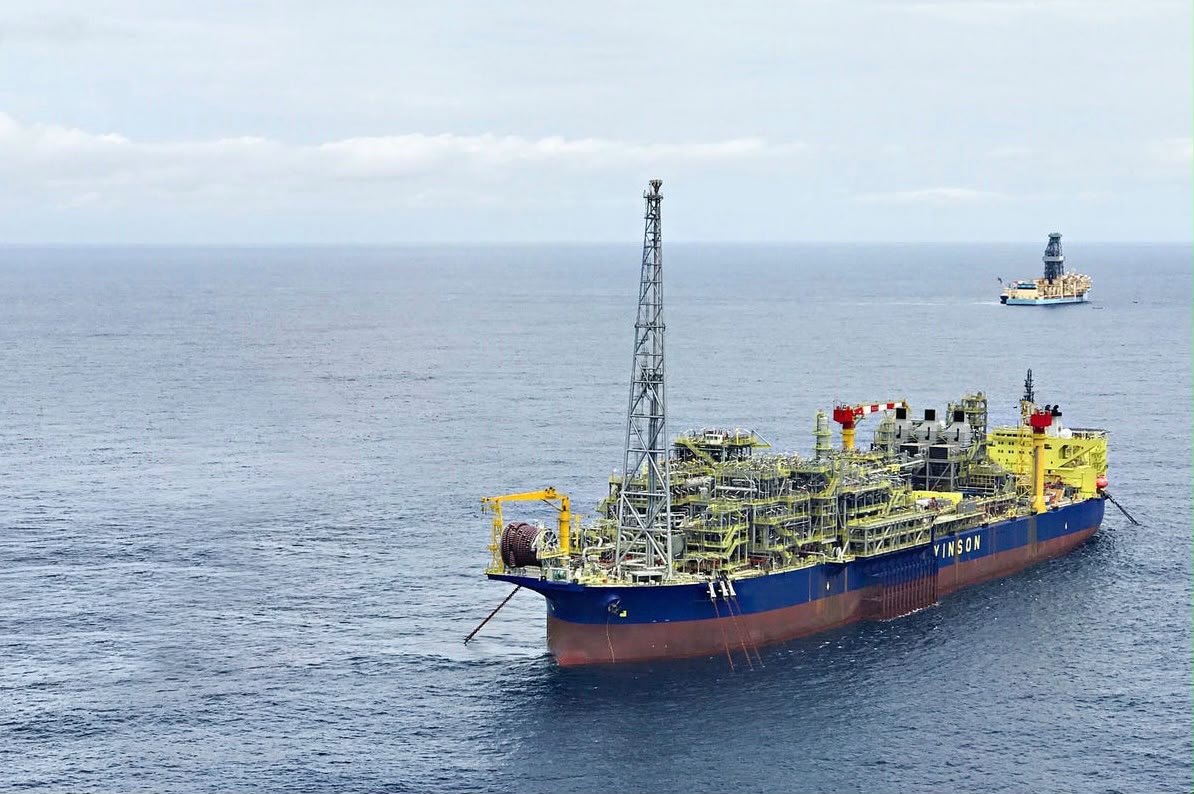
On Oct. 2, Eni Ghana and Yinson Production signed a contract amendment covering the Sankofa field. Yinson, which operates the FPSO John Agyekum Kufuor, will add gas compression and treatment modules to the vessel. The $600 million upgrade lifts export capacity from roughly 210 million to 220 million standard cubic feet a day to 355 million by the first quarter of 2028. The vessel’s lease also runs four years longer, through 2036.
The second project sits at Atuabo, where the Ghana National Gas Company is building Gas Processing Plant Train 2. The existing Train 1 can handle 150 million standard cubic feet a day at peak but usually runs near 120 million, and it already takes gas from the Jubilee and TEN fields. That leaves little room for Sankofa’s extra output.
Train 2 will start at 150 million standard cubic feet a day and can grow to 300 million, bringing combined capacity to 450 million. Estimated cost runs between $700 million and $812 million, financed through public-private partnerships that include the Africa Finance Corporation. The plant will use turbo-expander technology to recover about 80 percent of natural gas liquids, against 40 percent to 50 percent at Train 1. Officials expect that to cut LPG imports and save more than $151 million a year. Ghana Gas is also adding a compressor station on the Atuabo mainline to manage pressure changes from the incoming gas, a safeguard meant to keep supply steady as volumes rise.
More gas could mean fewer switches to light crude and distillate fuel oil when supply runs short, which would trim generation costs and foreign exchange spending on imported fuel. But Sankofa produces non-associated gas, whose development costs differ from the associated gas coming from Jubilee. A bigger share of Sankofa supply could push up the weighted average cost of gas, the benchmark the Public Utilities Regulatory Commission uses to set electricity tariffs, and eat into some of the savings.
Timing is the pressure point. Both projects are aiming to finish ahead of the first quarter of 2028, which leaves little room for slippage. If Train 2 lags, Ghana could be forced to flare gas it cannot process or move.
The work also feeds a larger plan. President John Dramani Mahama said in New York on Sept. 25 that Ghana will sign an agreement before year end for a 1,200-megawatt state-owned gas plant, which would surpass the 1,020-megawatt Akosombo station as the country’s single biggest. Government documents say an additional 150 million standard cubic feet of gas a day is expected to supply it.
If delivered on schedule, the combined investments could strengthen fuel security and make power costs easier to predict. Consumers, however, are more likely to feel protection from sharp tariff increases than a big drop in their bills, according to Business Post.