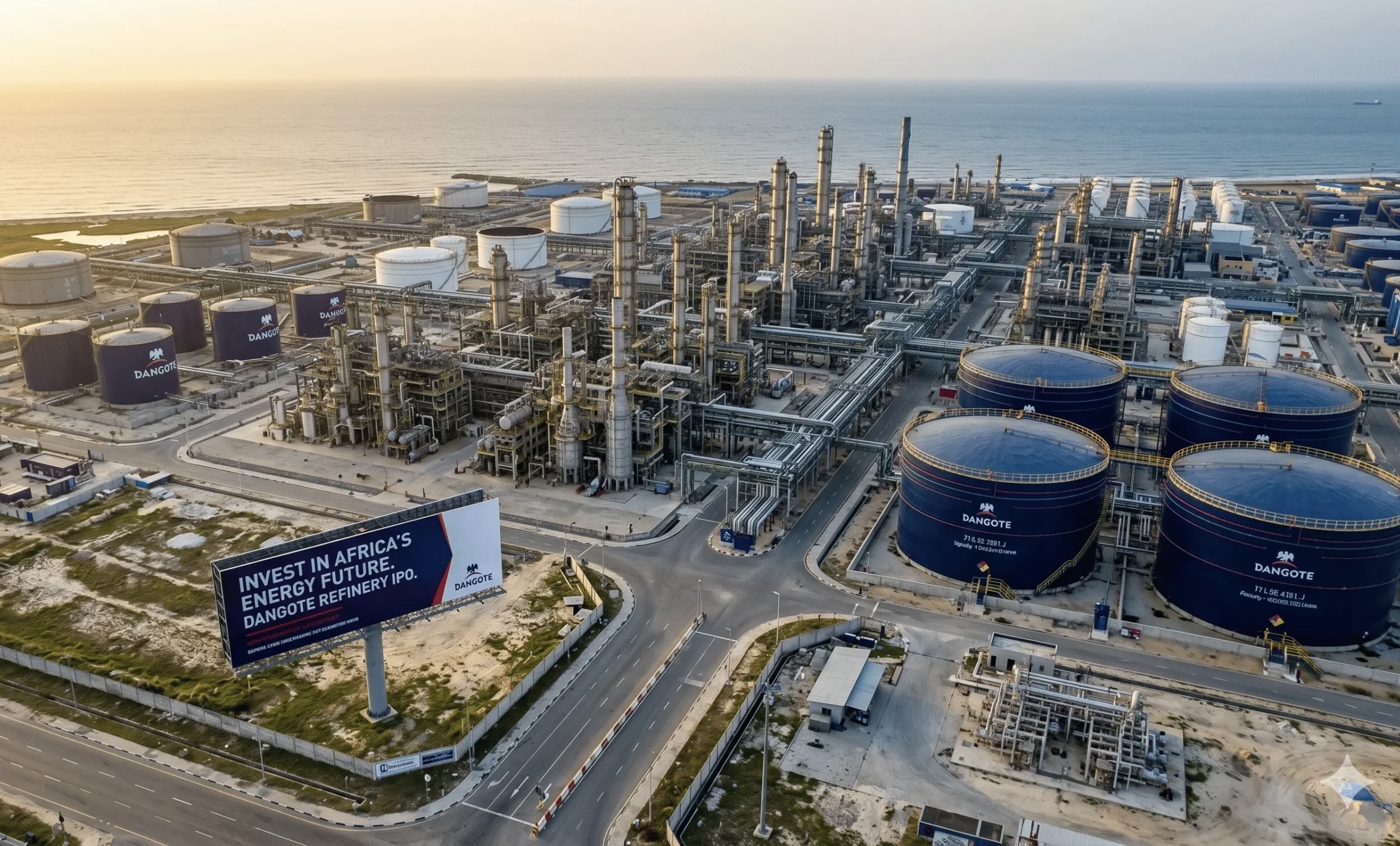
KEY POINTS
- Dangote Refinery is preparing for a potential $5bn IPO in October, which could become Africa’s largest.
- About 30–40% of its crude intake is imported, raising concerns over feedstock costs and profit margins.
- Analysts say securing reliable, competitively priced crude will be crucial to the refinery’s expansion and valuation.
Nigeria’s Dangote Refinery is preparing for a potential record-breaking initial public offering, IPO, but investors are increasingly focused on one major challenge: whether the refinery can secure enough crude oil at competitive prices to sustain its profitability and planned expansion.
The 650,000-barrels-per-day refinery is expected to seek about $5 billion from its planned October listing, which could become Africa’s largest IPO. The company, owned by Africa’s richest man, Aliko Dangote, is also planning to double its refining capacity within the next three years.
However, analysts say the cost and availability of crude feedstock could significantly influence the refinery’s future earnings, operating capacity and valuation.
Although Nigeria is Africa’s largest crude oil producer, producing about 1.6 million barrels per day, the Dangote Refinery has increasingly relied on crude supplies from outside the country.
David Bird, chief executive of the refinery, told Reuters that imported crude accounts for about 30 to 40 per cent of the refinery’s total intake.
This dependence is partly linked to the limited availability of Nigerian crude for the refinery. Much of the crude controlled by the Nigerian National Petroleum Company Limited (NNPC) through its joint-venture arrangements is committed to oil-backed loans and pre-export financing agreements.
As a result, the amount of locally produced crude available for domestic refiners can be constrained.
For Dangote, the issue is not only whether crude is available, but whether it can obtain the feedstock at a price that allows the refinery to maintain strong margins.
Higher crude costs could pressure profits
Analysts warn that purchasing crude from international suppliers could increase the refinery’s operating costs, particularly because those transactions are largely denominated in US dollars.
Mikolaj Judson, an analyst at Control Risks, said difficulties in securing competitively priced feedstock could raise costs, reduce margins and affect utilisation rates.
That, in turn, could have implications for the commercial performance and valuation of the refinery as it prepares to approach investors through the planned IPO.
The refinery has benefited from favourable refining conditions in recent months, particularly as disruptions linked to the Iran war increased demand for alternative sources of petroleum products.
Dangote has been well positioned to take advantage of that demand because of its scale, modern technology and strategic location on Nigeria’s coast.
The refinery reached its initial maximum capacity of 650,000 barrels per day in February and has already tested production at 700,000 barrels per day.
Dangote’s management has also raised concerns about the pricing of Nigerian crude supplied to the refinery.
While some domestic crude transactions are denominated in naira, Dangote has argued that locally produced crude can still be more expensive than imported alternatives.
According to the refinery, the NNPC prices Nigerian crude using international benchmarks such as Brent, which incorporate freight and logistics costs.
Dangote argues that domestic refiners should not necessarily bear those additional costs because they are buying crude within Nigeria and do not incur the same transportation expenses associated with imports.
Edwin Devakumar, Group Vice President of Dangote Industries Limited, told Reuters that some Nigerian crude cargoes had been more expensive than comparable imports, although he did not disclose specific prices.