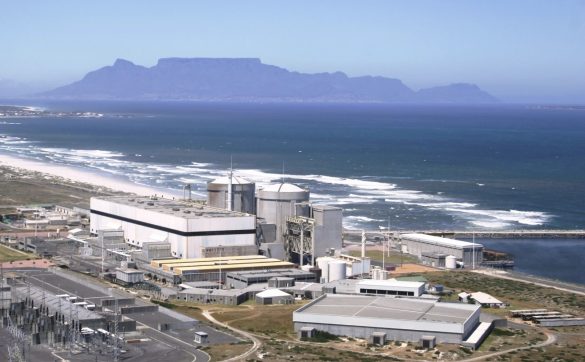
KEY POINTS
- Koeberg Nuclear Power Station’s Unit 1 was safely taken offline after a turbine trip shortly before 1am on August 27.
- Eskom says nuclear safety was never compromised and the national electricity grid remains stable.
- The cause of the turbine trip is under investigation, while separate investigations continue into sardine deaths along South Africa’s coast.
South Africa’s power utility Eskom has safely taken Unit 1 of the Koeberg Nuclear Power Station offline following a turbine trip early Thursday morning.
Eskom said the unit was removed from service shortly before 1am on August 27, 2026, in line with established safety and operating procedures.
The utility said monitoring systems showed that plant conditions remained stable throughout the incident and that nuclear safety was never compromised.
According to Eskom, there was no danger to employees, members of the public or the environment.
The station’s protection and monitoring systems operated as designed, ensuring that the reactor unit remained in a safe condition following the turbine trip.
Eskom said the temporary loss of Unit 1 would not threaten South Africa’s national electricity supply.
The utility said it has sufficient generation capacity available to compensate for the loss of the unit and maintain stability across the national grid. It added that the electricity system remained stable and secure following the incident.
The development is significant because Koeberg is South Africa’s only nuclear power station and plays an important role in providing reliable baseload electricity to the national grid.
Unit 1 had operated reliably since major maintenance
Eskom said Unit 1 last underwent major maintenance, which was completed in October 2025. Since returning to service, the unit had operated reliably before its latest shutdown.
However, generation from the unit was temporarily reduced in August as a precaution because of challenges involving seawater intake at the station.
The challenges were linked to an influx of sardines near Koeberg’s cooling-water system. The seawater-related issue occurred during a period when increased sardine mortality was also reported along South Africa’s southwestern and West Coast.
Eskom stressed that an inter-agency investigation led by the Department of Forestry, Fisheries and the Environment is still examining the matter.
The utility said there is currently no evidence connecting the reported sardine deaths to the operations of Koeberg Nuclear Power Station.
The clarification is important given the role of seawater in Koeberg’s cooling system and concerns that could arise over the potential environmental impact of nuclear facilities. Eskom said the immediate cause of the latest turbine trip has not yet been established.
An investigation is underway to determine what triggered the shutdown and whether any equipment or operational issue contributed to the incident.
The utility said it would continue to provide updates as more information becomes available.
For now, Eskom maintains that the incident did not compromise nuclear safety and that the national electricity grid remains secure.