KEY POINTS
- Libya’s NOC is seeking stronger partnerships with BP, Shell, KBR, Vitol and Glencore.
- The focus is on boosting oil and gas output, infrastructure and facility efficiency.
- Technology transfer, training and local capacity building are central to the plan.
Libya’s state-owned National Oil Corporation, NOC, is seeking stronger cooperation with British and international energy companies as it works to increase oil and gas production, improve the efficiency of its facilities and modernise operations.
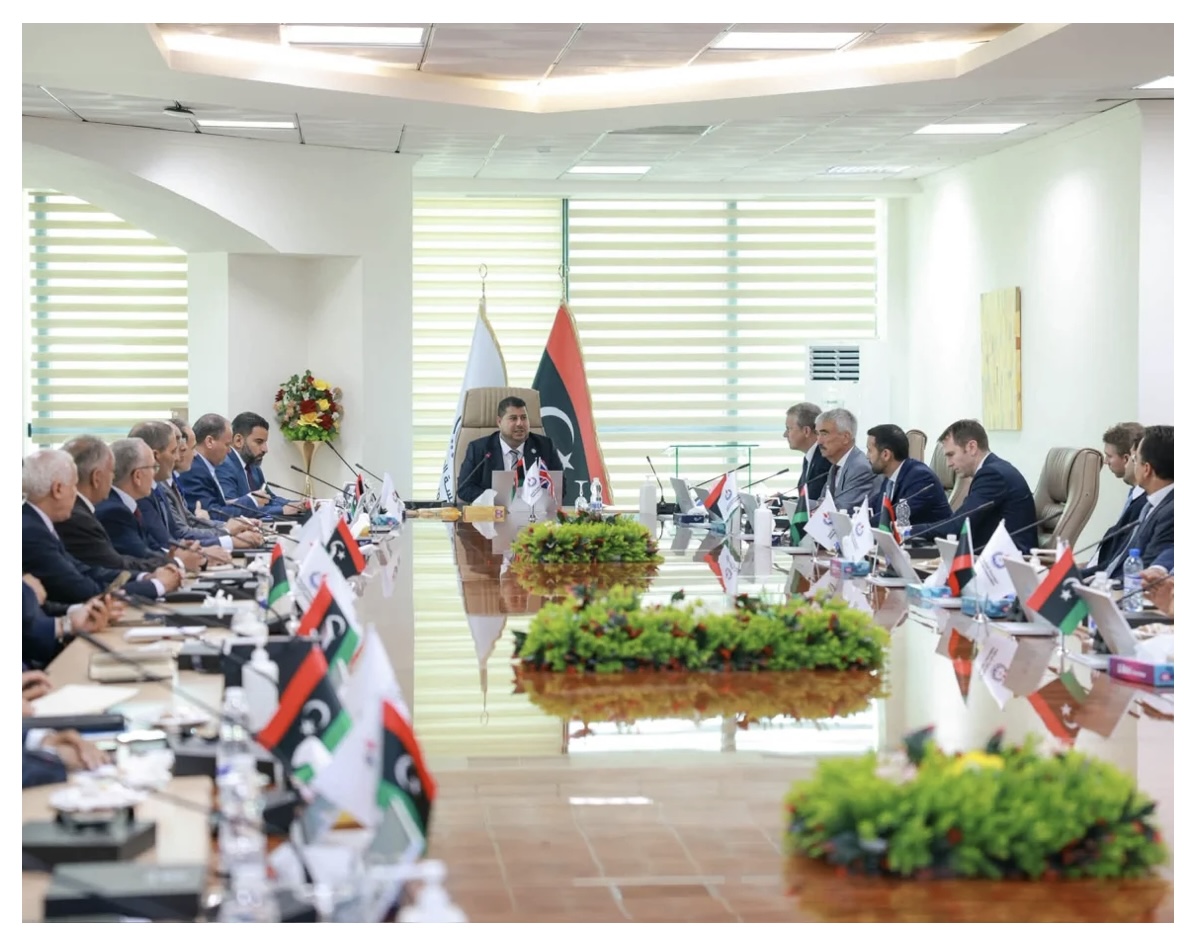
NOC Chairman Masoud Suleiman held an extensive meeting with representatives of major energy companies, including BP, Shell, KBR, Vitol and Glencore, as part of efforts to identify practical areas of cooperation and technology transfer.
The meeting was also attended by NOC department heads and technical specialists, representatives of the British Embassy in Libya and the coordinator of the Libyan British Business Council.
Discussions focused on how international companies can provide technical expertise, modern technologies and operational solutions to support Libya’s plans for developing its oil and gas industry.
Suleiman stressed that the discussions should go beyond general commitments and result in practical cooperation programmes.
He directed NOC’s technical and specialist departments to establish direct working channels with the participating companies according to their respective areas of expertise.
The departments are expected to assess the corporation’s operational needs, examine solutions offered by the companies and identify projects that could be developed jointly.
The approach is aimed at allowing the NOC to benefit directly from international experience while addressing some of the technical and operational challenges affecting Libya’s energy industry.
Production growth remains a major priority
Increasing oil and gas production was identified as one of the key priorities during the meeting.
Libya relies heavily on hydrocarbons for government revenue and foreign exchange earnings, making the performance of its oil sector particularly important to the wider economy.
The NOC is therefore looking to improve the reliability and productivity of existing assets while exploring opportunities to introduce modern technologies across its operations.
The discussions also covered ways to improve facility efficiency and strengthen maintenance practices, asset management and safety standards.
Better management of existing infrastructure could help reduce operational disruptions and protect production capacity. Infrastructure development was another major area discussed by the participants.
The NOC wants international partners to contribute expertise and technologies that can help modernise oil and gas facilities and improve their long-term performance.
Technology transfer is also expected to play a significant role in strengthening Libya’s domestic technical capabilities.
The corporation is seeking opportunities for training, knowledge sharing and national capacity building so that Libyan professionals can acquire the skills needed to operate and maintain increasingly sophisticated energy infrastructure.
The emphasis on training could also help the NOC reduce dependence on external expertise over time while creating a stronger pool of local specialists. The participation of BP, Shell, KBR, Vitol and Glencore reflects the NOC’s interest in working with companies with experience across different parts of the energy value chain.
While some of the companies have long-standing links with Libya’s energy sector, the latest discussions appear focused on expanding cooperation around production, technology, infrastructure and operational efficiency.
The presence of British diplomatic representatives and the Libyan British Business Council also points to a broader effort to strengthen commercial ties between Libya and the United Kingdom in the energy sector.
The NOC said the engagement forms part of its wider drive to attract international expertise, advanced technology and investment into Libya’s oil and gas industry.
It expects stronger partnerships to support its production targets, improve the performance of existing facilities and create new opportunities for cooperation.
The corporation’s ability to turn the latest discussions into specific projects will be important as Libya seeks to maximise its oil and gas potential and strengthen the contribution of the energy sector to the national economy.